
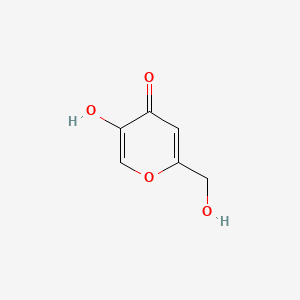
Kojic acid is a secondary metabolite commonly produced by many species of filamentous fungi including Aspergillus and Penicillium. Due to its inhibitory effect on tyrosinase activity and melanogenesis, Kojic acid has been widely used as a skin lightening/whitening agent in cosmetic products.
Kojic acid has been reported to interfere with either iodine organification or iodine uptake by the thyroid, resulting in altered thyroid functions, hence it was included in the priority list for safety assessment. During the call for data, stakeholders submitted scientific evidence to demonstrate the safety of Kojic acid in cosmetic products. The Commission requests the SCCS to carry out a safety assessment on Kojic acid in view of the information provided.
CONCLUSION (SCCS/1637/21, Final version & CORRIGENDUM)
- In light of the data provided and taking under consideration the concerns related to potential endocrine disrupting properties of Kojic acid, does the SCCS consider Kojic acid safe when used in cosmetic products up to a maximum concentration of 1 %?
On the basis of the safety assessment and considering the concerns related to potential endocrine disrupting properties of Kojic acid, the SCCS is of the opinion that Kojic acid is safe when used as a skin lightening agent in cosmetic products at concentrations of up to 1%.
- Alternatively, what is according to the SCCS the maximum concentration considered safe for use of Kojic acid in cosmetic products?
/
- Does the SCCS have any further scientific concerns with regard to the use of Kojic acid in cosmetic products?
As Kojic acid is sometimes added to peeling agents, a weakened skin barrier may be of additional concern because of greater dermal absorption. Only the topical use of Kojic acid in cosmetics has been considered in this Opinion. Other uses (e.g. food) of natural or synthetic sources have not been considered. As far as the derivatives of Kojic acid are concerned, e.g. esters of Kojic acid such as Kojic acid dipalmitate and Kojic acid isopalmitate, and derivatives such as chloroKojic acid, these have not been included in this Opinion as no data has been submitted.
Publication date: 17 March 2022
Source:
SCCS Number: SCCS/1637/21, Final version & CORRIGENDUM.
Image source: PubChem