New EU Restrictions on D5 and D6 Silicones in Cosmetic Products
The EU introduces new restrictions on D5 and D6 silicones in cosmetic products. Learn what cosmetic companies must do to comply with the new REACH regulation.

The EU introduces new restrictions on D5 and D6 silicones in cosmetic products. Learn what cosmetic companies must do to comply with the new REACH regulation.
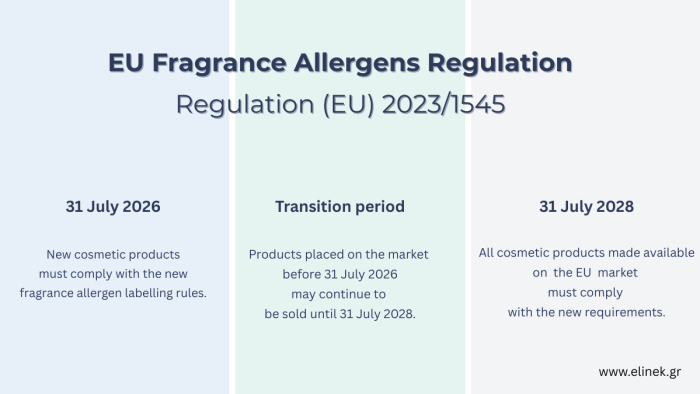
Deadlines of Regulation 2023/1545, which addresses the labeling of fragrance allergens on cosmetic products.
Scientific Committee has published its preliminary opinion on Salicylic Acid. It was adopted by written procedure on 14 December 2022 and is open for comments until 17 February 2023.
-SCCS/1643/22-Final Scientific Advice on the safety of Triclocarban and Triclosan as substances with potential endocrine disrupting properties in cosmetic products.
The European Commission has published the official Regulation (EU) 2022/2195 setting new restrictions for: BHT, Acid Yellow 3, Homosalate, and Piperazine. It also corrects the use of Resorcinol in cosmetic products.
The European Commission has published the draft document for the 18th Adaptation to Technical Progress (ATP) to Regulation (EC) 1272/2008 of the CLP Regulation. Some cosmetic ingredients will be affected due to their hazardous harmonized classification.
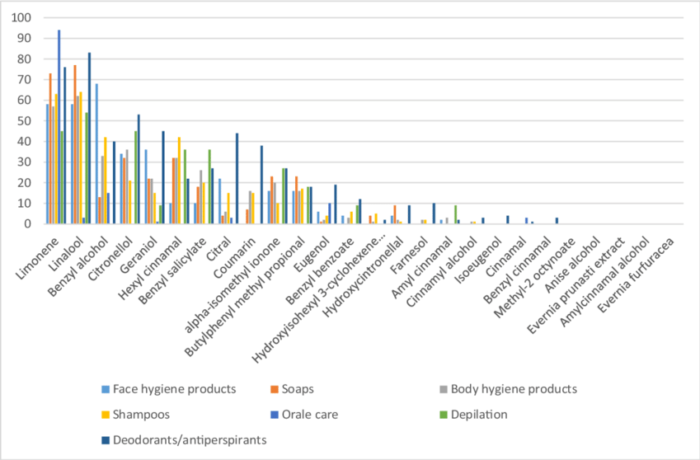
European Commission notified the WTO of a new amendment to the Cosmetic Regulation. The publication is amending Regulation (EC) No 1223/2009 of the European Parliament and the Council as regards the labeling of fragrance allergens in cosmetic products. Mandatory labeling of some 56 additional fragrance allergens.
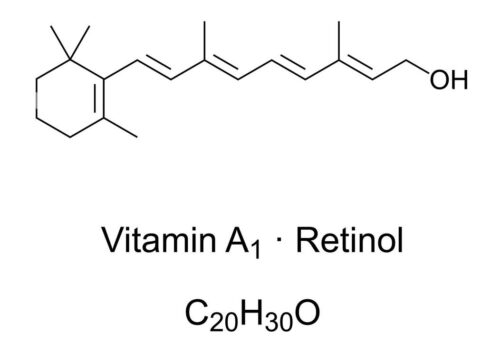
In 2016, the SCCS issued the opinion SCCS/1576/16 on Vitamin A. In its opinion, SCCS recognized also that the population’s overall exposure to Vitamin A can be significantly higher. Based on the SCCS opinion, intake of Vitamin A via additional sources of exposure to Vitamin A (in addition to exposure via food) may, therefore, exceed…
The COSMOS-standard is currently under review and a new version will be published towards the end of 2022.
The European Union published Regulation 2022/1531, the 5th annual text aiming to ban or regulate substances recently classified as CMR. This Regulation deals with substances classified as CMR by Regulation 2021/849 (17th ATP to CLP), which will apply from 17 December 2022.